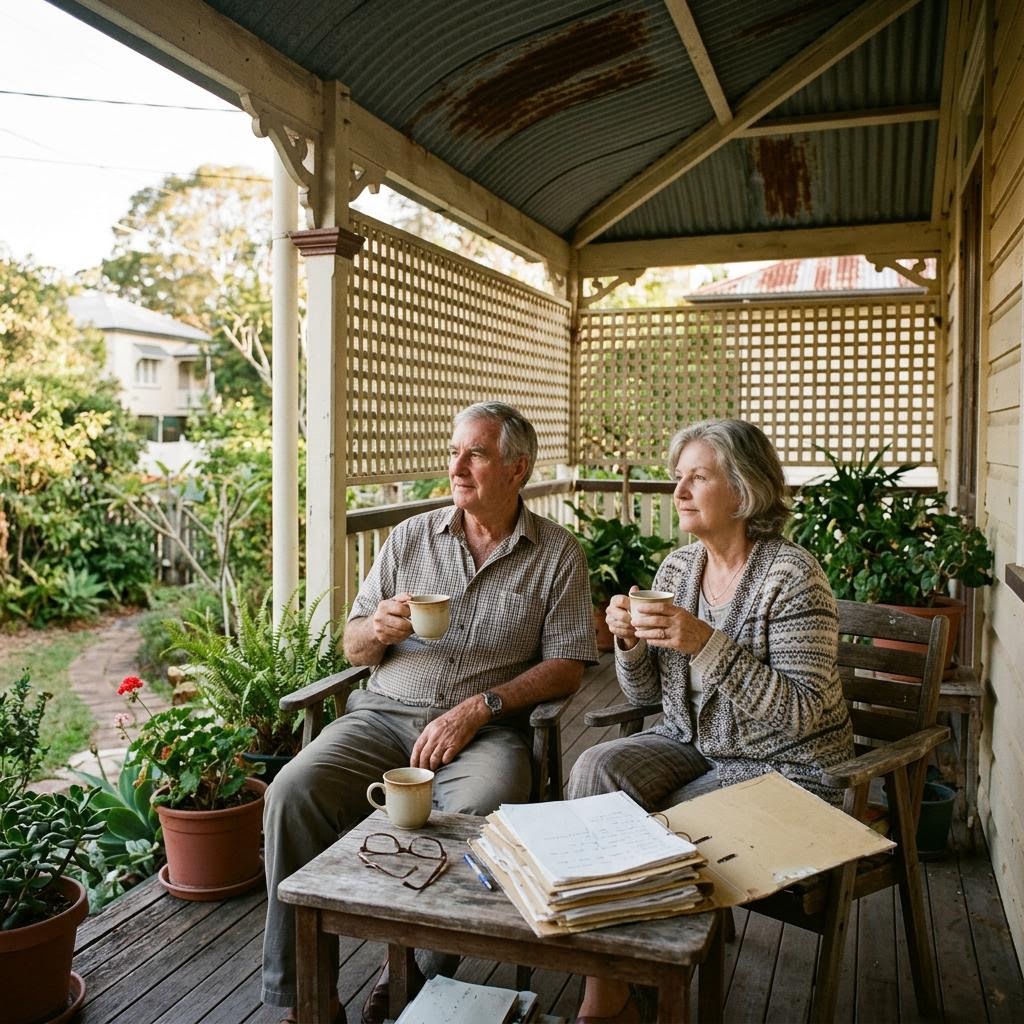
Based on a real Australian reverse mortgage case study. Some personal details have been simplified while preserving the circumstances and overall outcome described.
The Story
When Sheila and Bruce retired, they thought they had planned well.
Their home was worth considerably more than it had been a decade earlier. They had modest savings, received retirement income and weren't extravagant spenders.
Even so, something had changed.
The cost of simply living had crept up.
Council rates increased.
Insurance premiums rose again.
Power bills became less predictable.
Every trip to the supermarket seemed to cost more than the last.
None of the expenses were individually overwhelming.
Together, though, they created a retirement that felt increasingly constrained.
The couple found themselves asking a question many retirees quietly ask.
"How can we make retirement feel a little easier without leaving the home we love?"
What Actually Happened
Rather than downsizing immediately, Sheila and Bruce investigated ways of accessing some of the wealth tied up in their home.
After exploring their options, they chose a reverse mortgage.
The additional funds gave them greater flexibility to meet everyday expenses and reduced the pressure they felt from rising living costs.
Importantly, the reverse mortgage wasn't used to dramatically change their lifestyle.
Instead, it provided greater financial confidence.
Unexpected expenses became easier to manage.
They no longer felt the need to carefully weigh every purchase against the possibility of another large bill arriving the following month.
Most importantly, they remained in the home and community they had spent years building.
Original case study:
https://www.inviva.com.au/blogs-and-articles/case-study-how-a-reverse-mortgage-can-supplement-your-retirement-income
Why They Made That Choice
The couple weren't looking to become wealthier.
They were looking to become less anxious.
Like many retirees, much of their wealth existed on paper through the value of their home rather than as readily available cash.
Selling the property would have unlocked that wealth, but it would also have meant leaving familiar neighbours, routines and memories behind.
The reverse mortgage became one way of accessing part of that equity while continuing to live where they felt most comfortable.
Lessons Learned
Several practical themes emerge from Sheila and Bruce's experience.
Financial stress isn't always caused by major debt. Sometimes it's the accumulation of everyday expenses that slowly erodes confidence during retirement.
Cash flow and net worth are different things. A homeowner can have significant equity while still feeling pressure from monthly living costs.
Retirement planning continues after retirement begins. Economic conditions change, and strategies that seemed appropriate years earlier may be reviewed as circumstances evolve.
Peace of mind has value. Many retirement decisions involve balancing financial outcomes with lifestyle, familiarity and emotional wellbeing.
What Other People Thought
Many readers related to the couple's situation.
They recognised that rising living costs have changed retirement planning for many Australians.
Some believed downsizing would have been the more straightforward financial solution.
Others argued that remaining close to established support networks, healthcare providers and friends becomes increasingly valuable with age.
Several people observed that retirees often don't want more possessions or luxury spending.
They simply want confidence that ordinary living expenses won't become a constant source of worry.
That distinction shaped much of the discussion.
How This Compares to Australia
One of the most common reasons Australians consider a reverse mortgage is to supplement retirement income while remaining in their own home.
Depending on the lender and product, funds may be received as a lump sum, regular income payments, a line of credit or a combination of these options.
Australian reverse mortgages are regulated under consumer credit legislation and include a statutory No Negative Equity Guarantee for eligible loans.
Although the additional funds may improve day-to-day cash flow, interest generally compounds on the outstanding balance over time, meaning the amount owing typically increases unless voluntary repayments are made.
Understanding how this may affect future equity is an important consideration for homeowners exploring this type of loan.
Key Takeaways
Sheila and Bruce's story reflects a challenge that many retirees don't expect.
Owning a valuable home doesn't automatically make monthly finances feel comfortable.
Their reverse mortgage wasn't about creating a different retirement.
It was about making their existing retirement feel more secure.
For them, the greatest benefit wasn't purchasing something new.
It was removing some of the financial uncertainty that had gradually become part of everyday life.
Story Snapshot
Location: Australia
Source: Inviva
Perspective: Retired homeowners
Stage: Reverse mortgage established
Primary reason for the loan: Supplement retirement income while remaining in the family home
Outcome: Positive
Biggest concern: Rising everyday living costs during retirement
Key lesson: For some retirees, accessing part of the equity in their home can improve day-to-day cash flow and reduce financial pressure, while allowing them to continue living in familiar surroundings.
Source