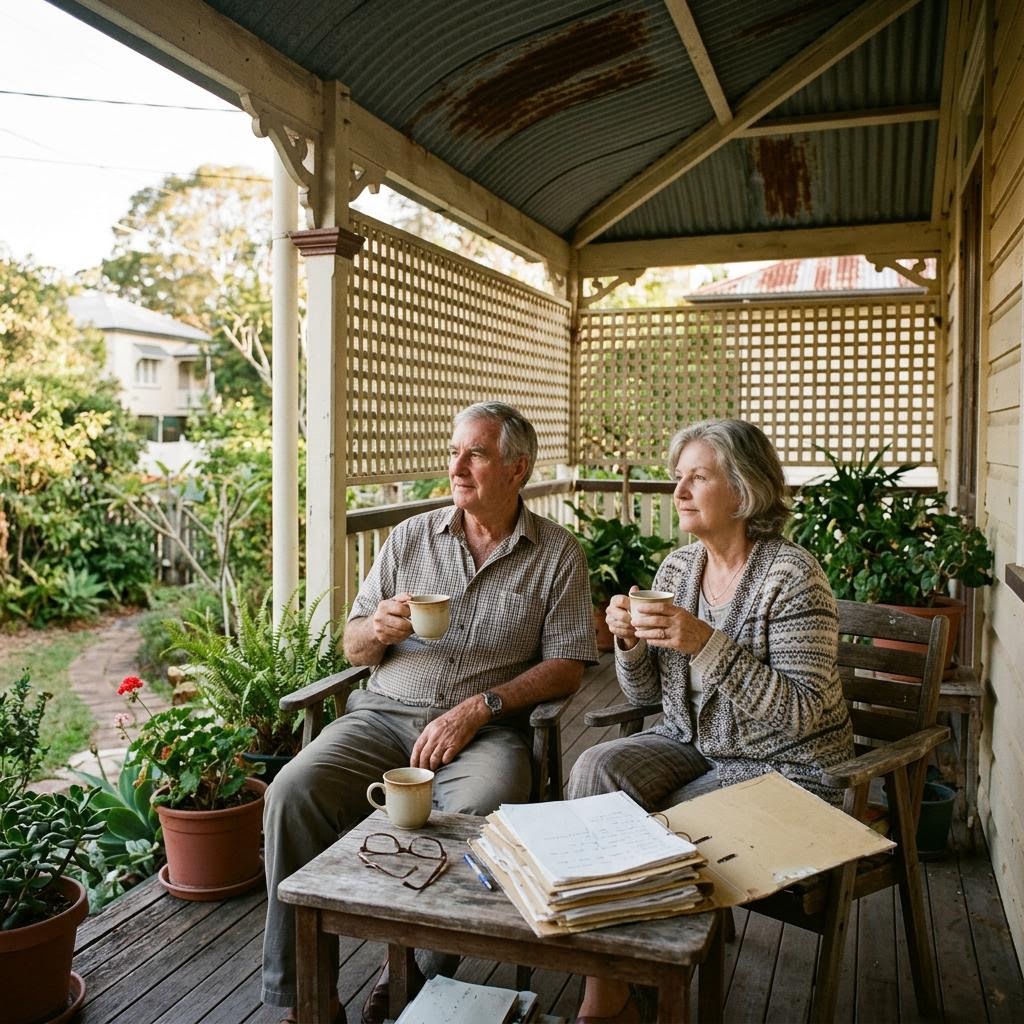
Based on a real discussion shared online by the adult child of a reverse mortgage borrower. Some personal details have been simplified while preserving the events and circumstances described.
The Story
Losing a parent is overwhelming enough without having to unravel their finances.
When the family received the call that their father had passed away unexpectedly, they weren't thinking about mortgages, paperwork or property values. They were organising a funeral, supporting one another and helping their mother adjust to life without her husband.
Then they found the reverse mortgage.
They knew it existed, but they didn't really know what happened next.
Would the bank immediately force the sale of the home?
Could their mother continue living there?
Would the family inherit a debt larger than the value of the house?
The questions came quickly, and there wasn't much clear information.
Unsure where to turn, the family's adult child posted online, hoping someone who had already been through the process could explain what to expect.
What Actually Happened
The responses were reassuring in one important respect.
Many people explained that the death of one borrower doesn't automatically mean the home has to be sold immediately, particularly if an eligible surviving spouse remains living in the property under the terms of the loan.
The discussion then shifted to practical matters.
The family would need to contact the lender, provide the required documentation and understand exactly how the reverse mortgage had been structured.
Some commenters shared their own experiences managing similar situations after losing a parent. Others explained how the process typically works once the last borrower permanently leaves the home or passes away.
While every loan is different, one consistent message emerged.
The reverse mortgage itself wasn't creating the family's stress.
It was the uncertainty about the process.
Original discussion:
https://www.reddit.com/r/personalfinance/comments/n8m5uq/my_dad_who_has_a_reverse_mortgage_died/
Why They Made That Choice
The story doesn't explain why the parents originally chose a reverse mortgage, but it reflects a common reality.
Many couples use the equity in their home to supplement retirement income, cover unexpected expenses or maintain their lifestyle without selling the family home.
When both borrowers are alive, the arrangement may work exactly as intended.
The difficult questions often don't arise until a major life event, such as the death of one partner, forces the family to understand a financial product they may never have discussed in detail before.
Lessons Learned
Several important themes appeared throughout the discussion.
Know who is listed as the borrower. Whether one or both spouses are named on the loan can affect how the reverse mortgage continues after the death of one borrower.
Keep loan documents accessible. Families often struggle because they don't know which lender holds the loan, how much has been borrowed or where the paperwork is stored.
Contact the lender early. The first conversation is usually about understanding the process, not making immediate decisions.
Family members benefit from understanding the loan before it becomes an estate matter. Waiting until after a death can add unnecessary stress during an already emotional time.
Perhaps the biggest lesson wasn't about reverse mortgages at all.
It was about communication.
Several commenters said their families wished they had spoken more openly about financial arrangements while everyone was still able to explain them.
What Other People Thought
The discussion was noticeably calmer than many online conversations about reverse mortgages.
Rather than warning the family that disaster was inevitable, most contributors focused on explaining what generally happens after a borrower's death.
People who had experienced similar situations encouraged the family to gather information before assuming the worst.
Some explained that they had been surprised by how straightforward the process ultimately became once they understood the lender's requirements.
Others acknowledged that estate administration can still take time, particularly where multiple family members are involved.
The strongest message was simple.
Ask questions first.
Assumptions create far more anxiety than facts.
How This Compares to Australia
Australian reverse mortgages include legal protections that differ from those in some overseas markets.
Exactly what happens after the death of a borrower depends on the terms of the individual loan and who remains entitled to occupy the property.
Where a surviving borrower continues to meet the loan conditions, the loan may continue rather than becoming immediately repayable. Once the loan eventually becomes due, it is commonly repaid from the sale of the property or by another arrangement agreed with the lender.
Australian reverse mortgages that fall under the relevant legislation also include a No Negative Equity Guarantee, meaning borrowers or their estates generally cannot owe more than the home's market value when it is sold.
Because every family's circumstances are different, the specific process should always be confirmed directly with the lender managing the loan.
Key Takeaways
This family's experience highlights a side of reverse mortgages that is rarely discussed.
The loan itself wasn't the source of most of the stress.
The uncertainty was.
When a loved one dies, families often have to make sense of financial products they didn't personally arrange. Understanding how a reverse mortgage works before that day arrives can make those conversations far less daunting.
For many families, the greatest benefit isn't having every answer in advance.
It's knowing where to find them.
Story Snapshot
Location: United States
Source: Reddit
Perspective: Adult child of borrower
Stage: Borrower deceased, surviving family seeking information
Primary reason for the original loan: Not specified
Outcome: Unresolved at the time of posting
Biggest concern: What happens to the home after the borrower's death
Key lesson: Clear documentation and early conversations with family members can reduce confusion when a reverse mortgage eventually becomes part of estate administration.
Source