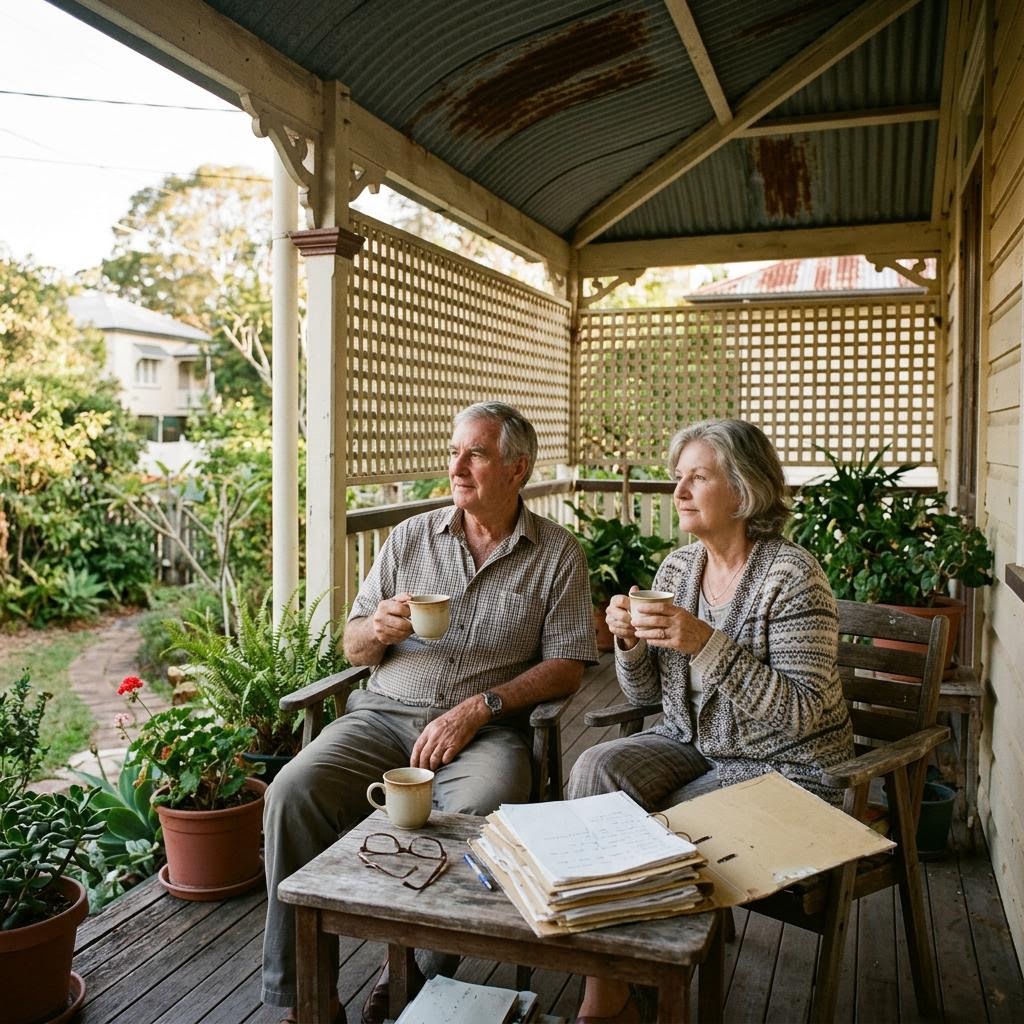
Based on a real discussion shared online by the adult children of a homeowner considering a reverse mortgage. Some personal details have been simplified while preserving the circumstances described.
The Story
When their mother first mentioned a reverse mortgage, the conversation around the dinner table became tense.
One of her children immediately objected.
"Those things are a rip-off."
Another suggested selling the house and moving somewhere smaller.
A third wondered whether she should simply tighten her budget and avoid borrowing altogether.
Their mother listened patiently.
Then she asked a simple question.
"If I sell this house, where exactly am I going to go?"
It wasn't a rhetorical question.
She'd lived there for more than thirty years. Her closest friends were nearby. She knew every shortcut through the neighbourhood, every local café owner, every doctor and pharmacist.
Moving wasn't just changing houses.
It meant changing her entire life.
Still unsure whether a reverse mortgage was the right decision, the family turned to an online discussion, hoping to hear from people who had actually experienced one rather than relying on headlines or television advertisements.
What Actually Happened
The responses surprised them.
Some commenters had parents who had taken reverse mortgages years earlier and said they had worked exactly as intended.
Others described situations where the loan had helped ageing parents remain independent far longer than would otherwise have been possible.
There were cautionary stories too.
Several people emphasised that interest compounds over time and that borrowers should understand how this affects the remaining equity in the home.
Others reminded readers that the decision should be judged against the alternative.
Would selling have been better?
Would moving have improved the homeowner's quality of life?
Or would remaining in familiar surroundings outweigh the financial trade-offs?
Rather than finding a unanimous answer, the family discovered something more useful.
The "right" outcome depended entirely on the homeowner's priorities.
Original discussion:
https://www.reddit.com/r/homeowners/comments/1mqvokv/do_you_know_anyone_who_has_gone_into_a_legitimate/
Why They Made That Choice
Their mother's decision wasn't driven by a desire to leave less inheritance.
It was driven by a desire to remain independent.
The home represented decades of memories, friendships and community connections.
Selling would certainly have released equity.
Whether it would have improved her retirement was far less certain.
The reverse mortgage became one option that allowed her to access some of that value without immediately leaving the place she called home.
Lessons Learned
Several consistent themes emerged throughout the discussion.
There isn't one universal outcome. Reverse mortgages worked well for some families and poorly for others, largely depending on why the loan was taken in the first place.
Understanding the alternatives matters. Comparing a reverse mortgage with downsizing, selling, using savings or other available options often provides a more balanced perspective.
The homeowner's priorities should remain central. Adult children naturally think about inheritance, while parents may focus more on maintaining independence and quality of life.
Real experiences are often more nuanced than public perception. Many commenters said the reality was neither as positive nor as negative as they had expected before encountering a reverse mortgage firsthand.
What Other People Thought
The discussion became a thoughtful exchange rather than an argument.
Some contributors described reverse mortgages as one of the best financial decisions their parents had made because it allowed them to remain comfortably in their own home.
Others shared stories where families wished they had borrowed less or explored different options earlier.
Several people made an observation that appeared repeatedly.
A reverse mortgage is a financial tool.
Whether it becomes a good or bad experience depends largely on how well it matches the homeowner's goals and circumstances.
How This Compares to Australia
Australians considering a reverse mortgage often face many of the same questions discussed in this thread.
Should they downsize?
Should they stay?
How important is preserving an inheritance compared with improving retirement cash flow or remaining close to family and community?
Australian reverse mortgages are regulated under consumer credit legislation and, for eligible loans, include a statutory No Negative Equity Guarantee.
While every product differs, homeowners generally retain ownership of their property, and the loan balance usually increases over time as interest compounds unless voluntary repayments are made.
Understanding how these features work can help homeowners and their families have more informed conversations about whether a reverse mortgage aligns with their long-term objectives.
Key Takeaways
This family's experience wasn't about discovering the perfect financial solution.
It was about asking a better question.
Instead of asking whether reverse mortgages are "good" or "bad", they began asking whether the loan would help their mother achieve what mattered most to her.
That shifted the conversation.
The focus moved away from the product itself and towards the person using it.
For many families, that's where the most productive discussions begin.
Story Snapshot
Location: United States
Source: Reddit
Perspective: Adult children discussing a parent's decision
Stage: Considering a reverse mortgage
Primary reason being considered: Remaining in the family home while accessing equity
Outcome: Mixed discussion with both positive and cautionary experiences
Biggest concern: Whether a reverse mortgage was the right alternative to selling the home
Key lesson: Reverse mortgages are experienced very differently depending on the homeowner's goals, family circumstances and understanding of how the loan works.
Source