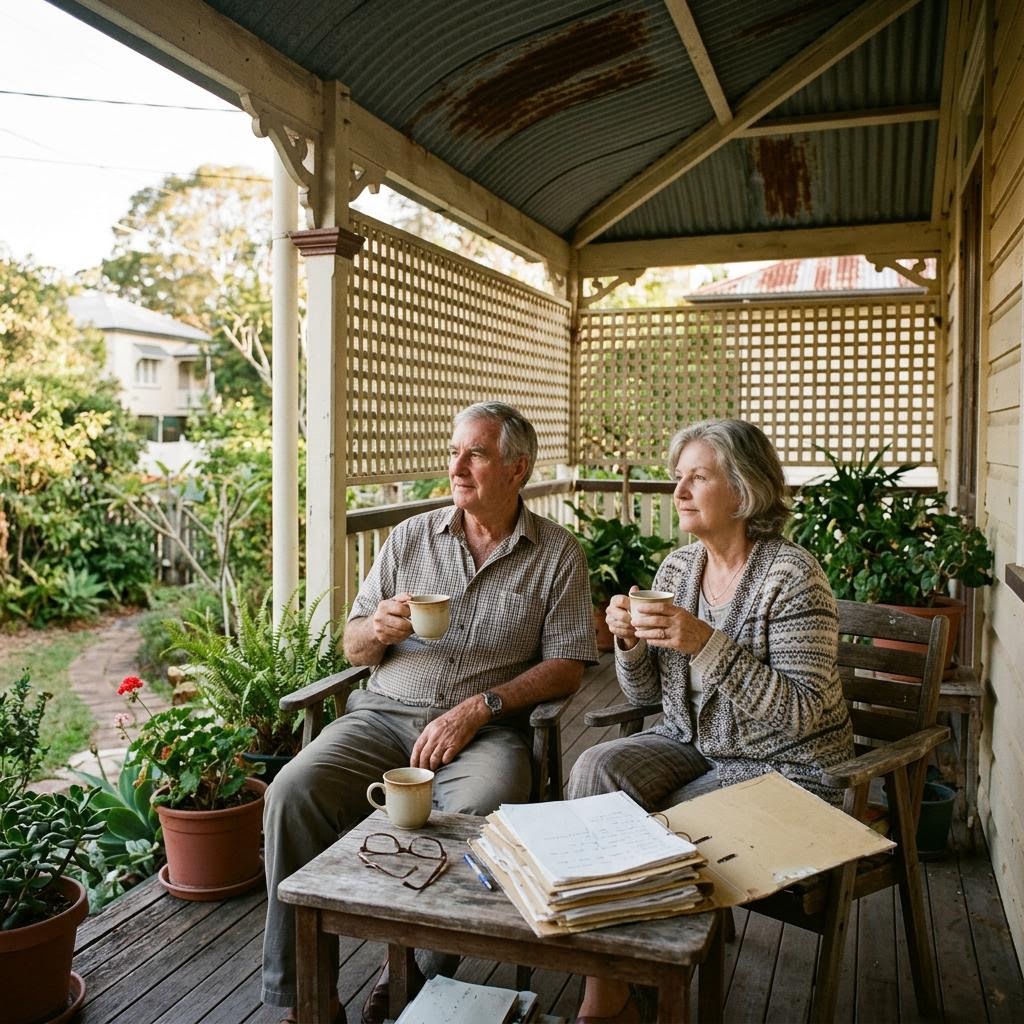
Based on a real discussion shared online by an adult child helping their mother compare downsizing with other retirement options, including a reverse mortgage. Some personal details have been simplified while preserving the circumstances described.
The Story
For months, our conversations centred on the same question.
"Can Mum afford to stay in the house?"
We looked at council rates.
Insurance.
Maintenance.
Utilities.
Every calculation pointed towards the same conclusion.
Selling would almost certainly reduce her ongoing costs.
It seemed like the sensible answer.
Then Mum quietly asked something none of us had considered.
"Can I afford to leave?"
At first, the question didn't make sense.
Surely moving to a smaller property would improve her finances.
Then she explained what she meant.
Leaving would mean finding new doctors.
A different pharmacy.
A new church.
Different neighbours.
The walking group she'd joined after Dad passed away.
Starting again felt far more expensive than any spreadsheet suggested.
That evening, I searched online for families who had faced the same dilemma.
What Actually Happened
The discussion revealed that many retirees wrestled with exactly the same trade-off.
Several contributors said downsizing had been one of the best decisions they ever made, particularly when maintaining a larger property became physically or financially difficult.
Others explained that staying in a familiar community had contributed significantly to their wellbeing and confidence during retirement.
Some homeowners described researching reverse mortgages because they wanted to understand whether remaining in the family home was financially achievable before deciding to sell.
Others concluded that moving was ultimately the better choice for their circumstances.
The discussion wasn't about proving either approach was superior.
It was about recognising that both involved costs, even if not all of those costs appeared on a bank statement.
Original discussion:
https://www.reddit.com/r/retirement/comments/staying_or_downsizing_in_retirement/
Why They Made That Choice
Mum wasn't trying to preserve a house.
She was trying to preserve the life built around it.
Everyday routines, familiar faces and community connections had become part of her retirement.
Before making a permanent decision, she wanted to understand every realistic option available, including whether accessing some of the equity in her home might allow her to remain there longer.
Lessons Learned
Several themes appeared consistently throughout the discussion.
Moving has financial and emotional costs. Retirement decisions often involve far more than comparing property values.
Community can become increasingly important with age. Familiar healthcare providers, neighbours and local services often influence housing decisions.
Every homeowner defines value differently. Some prioritise reducing expenses, while others place greater value on remaining where they feel most connected.
Compare the whole picture. Contributors encouraged considering lifestyle outcomes alongside financial outcomes before making significant retirement decisions.
What Other People Thought
Many retirees described reaching different conclusions despite facing similar circumstances.
Some downsized and enjoyed the freedom that followed.
Others believed remaining in familiar surroundings had given them greater peace of mind.
One idea appeared repeatedly.
The best retirement decisions usually reflected the homeowner's personal priorities rather than what others assumed was the logical choice.
How This Compares to Australia
Australian retirees regularly compare the financial and lifestyle implications of remaining in the family home versus moving elsewhere.
For eligible homeowners, a reverse mortgage is one option that may allow access to part of the home's equity while continuing to live there.
Australian reverse mortgages are regulated under the National Consumer Credit Protection framework and include a statutory No Negative Equity Guarantee.
Because each homeowner's circumstances differ, many compare reverse mortgages alongside downsizing and other retirement strategies before deciding which option best aligns with their long-term goals.
Key Takeaways
Our family began by asking whether Mum could afford to stay.
She reminded us to ask a different question.
What would she give up if she left?
Once we understood that, the conversation changed completely.
The reverse mortgage wasn't the answer.
It was simply one of several options worth understanding after we had properly identified what mattered most.
Story Snapshot
Location: United States
Source: Reddit
Perspective: Adult child
Stage: Comparing retirement options
Primary reason being considered: Explore whether Mum could remain in the family home while maintaining financial flexibility
Outcome: Unresolved
Biggest concern: Balancing the financial benefits of downsizing against the personal value of remaining in a familiar community.
Key lesson: Retirement housing decisions often involve both measurable financial outcomes and less tangible lifestyle considerations. Understanding both can lead to more informed choices.
Source