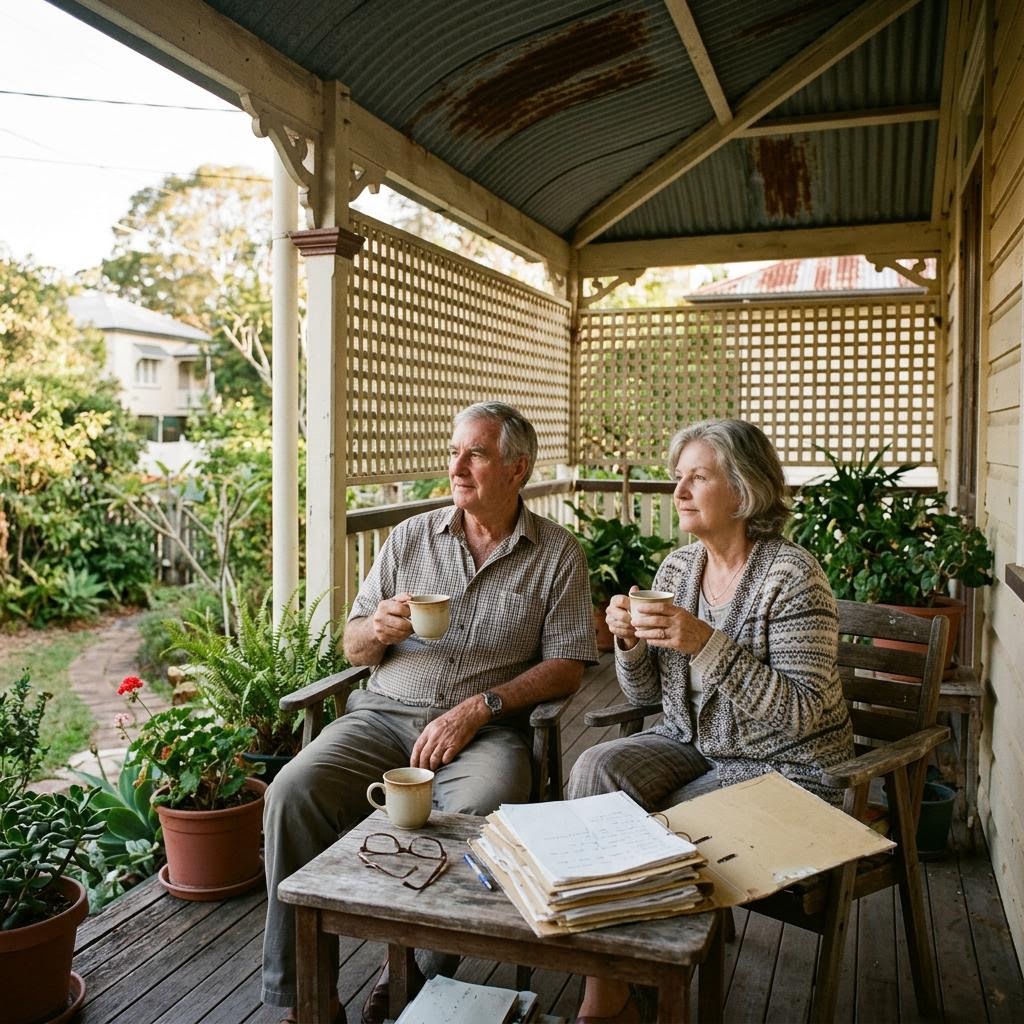
Based on a real discussion shared online by a family deciding what to do after their mother's financial circumstances changed in retirement. Some personal details have been simplified while preserving the circumstances described.
The Story
When Mum's expenses started increasing, the family reached an immediate conclusion.
"The house has to go."
It seemed logical.
The property was valuable.
Maintenance was becoming more difficult.
Selling would release plenty of money.
Problem solved.
Mum wasn't convinced.
She didn't argue.
She simply asked one question.
"What happens if I don't want to leave?"
Nobody had thought to ask her that.
The discussion had been about spreadsheets, not preferences.
One of her sons later admitted they had spent hours calculating what the house was worth but only minutes talking about what it meant to Mum.
Wanting to hear how other families had handled similar situations, he searched online and found retirees discussing reverse mortgages, downsizing and ageing in place.
What Actually Happened
The online discussion encouraged the family to slow down.
Many contributors explained they had initially assumed downsizing was the obvious solution until they considered everything attached to the home.
Neighbours who checked in regularly.
Doctors who knew their history.
Volunteer groups.
Friends.
Daily routines.
Others shared stories where downsizing genuinely improved their lives because maintaining a larger property had become overwhelming.
Several contributors also described reverse mortgages as one option that allowed some homeowners to remain where they were while reassessing their longer-term plans.
The discussion didn't tell the family what to do.
It helped them ask better questions.
Original discussion:
https://www.reddit.com/r/retirement/comments/downsizing_or_staying_put_in_retirement/
Why They Made That Choice
Mum wasn't refusing to move because she disliked change.
She wanted any decision to reflect her priorities rather than everyone else's assumptions.
If remaining at home was still realistic, she wanted to understand every available option before deciding to sell.
A reverse mortgage became part of that broader conversation rather than the automatic answer.
Lessons Learned
Several themes appeared throughout the discussion.
Don't confuse urgency with importance. Significant retirement decisions often benefit from careful consideration rather than quick conclusions.
The homeowner's priorities matter most. Family members may have different views, but understanding what the homeowner values creates a stronger foundation for discussion.
Housing decisions involve more than finances. Community, familiarity and independence often influence retirement choices.
Explore multiple options. Contributors regularly compared downsizing, accessing home equity and other retirement strategies before deciding.
What Other People Thought
Many retirees reflected on how their thinking had changed over time.
Some said downsizing had given them greater freedom.
Others believed remaining in familiar surroundings had improved their quality of life.
Most agreed there wasn't a universal answer.
The right decision depended on the person's health, finances, support network and retirement goals.
How This Compares to Australia
Australian homeowners often face similar decisions as retirement circumstances evolve.
For eligible homeowners, a reverse mortgage is one option that may allow access to part of the home's equity while continuing to live there.
Australian reverse mortgages are regulated under the National Consumer Credit Protection framework and eligible loans include a statutory No Negative Equity Guarantee.
As with any significant financial decision, homeowners generally compare the potential benefits, costs and long-term implications of each option before deciding what best suits their circumstances.
Key Takeaways
The family's first instinct was to solve a financial problem.
Their second conversation was much more useful.
It focused on what Mum wanted retirement to look like.
Only then did the different financial options begin to make sense.
Sometimes the most important decision isn't choosing between selling and borrowing.
It's making sure the homeowner's voice remains at the centre of the discussion.
Story Snapshot
Location: United States
Source: Reddit
Perspective: Adult child
Stage: Comparing retirement options
Primary reason being considered: Determine whether Mum could remain in the family home while improving financial flexibility
Outcome: Unresolved
Biggest concern: Whether selling the family home was necessary or whether other options should be explored first.
Key lesson: Before making major retirement decisions, understanding the homeowner's priorities often leads to more informed discussions about the available options.
Source