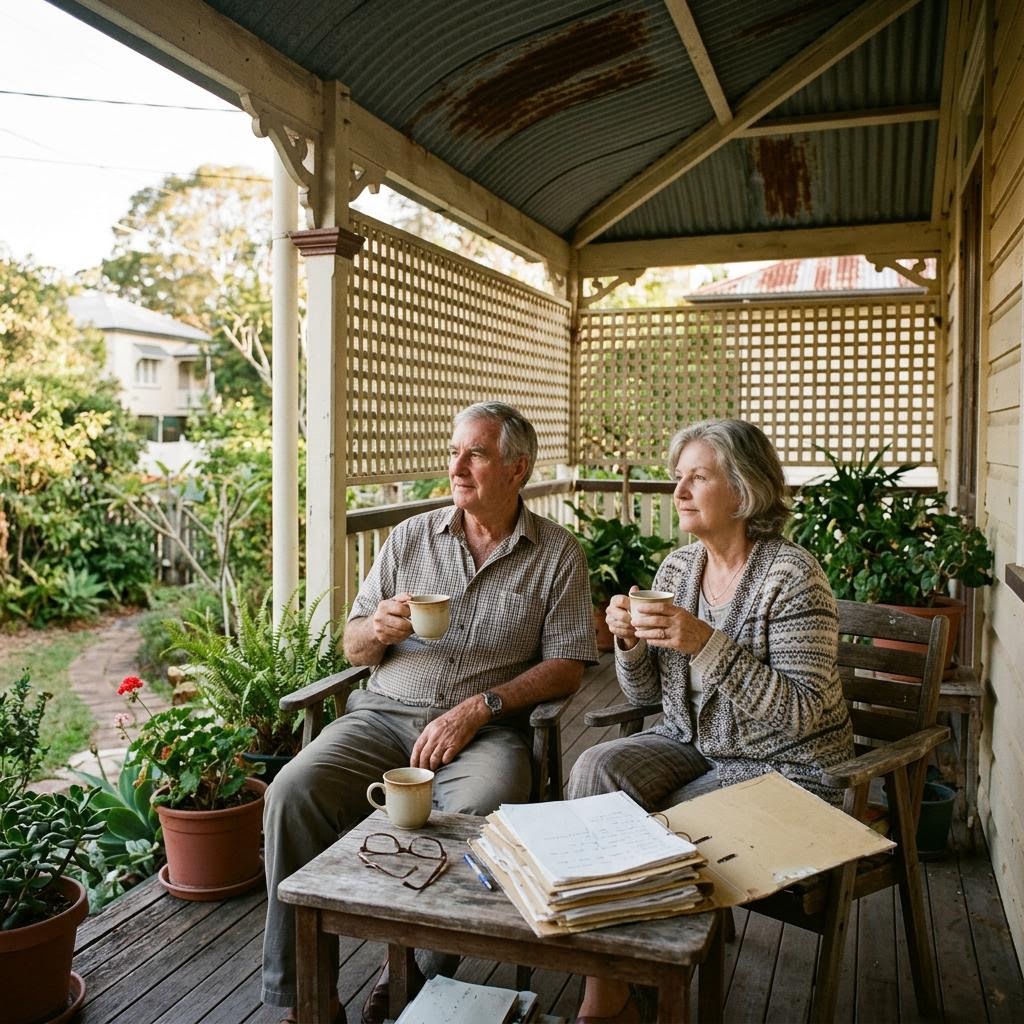
Based on a real discussion shared online by an adult child helping an ageing parent review retirement finances. Some personal details have been simplified while preserving the circumstances described.
The Story
Dad had always been fiercely independent.
Even after retiring, he insisted on mowing his own lawn, driving himself to the shops and fixing anything around the house that broke.
The family admired that determination, but they also noticed something changing.
He had started saying "no" to little things.
Lunch with friends became less frequent.
The heater stayed off longer during winter.
Repairs around the house were postponed.
Whenever anyone offered to help financially, he politely declined.
Eventually, one of his children asked whether money had become tighter than he was letting on.
After a long pause, Dad admitted that while the house was worth a substantial amount, most of his savings had been used over the years. He wasn't in immediate financial difficulty, but he worried about what would happen if a major expense arrived.
Someone suggested looking into a reverse mortgage.
Dad had heard plenty of opinions about them, but very few came from people who had actually used one.
His family searched online to hear real experiences before making any decisions.
What Actually Happened
The discussion quickly became less about reverse mortgages and more about retirement priorities.
Several people explained that their parents had used home equity to reduce financial pressure while remaining in their homes.
Others shared experiences where downsizing had been a better fit because maintaining a large property had become physically demanding.
A number of contributors encouraged the family to think beyond the immediate need for cash.
Would Dad still be comfortable living there in five or ten years?
How important were his neighbours, local doctor and community connections?
Would remaining in the home improve his overall quality of life?
The conversation reminded the family that retirement planning wasn't only about balancing a budget.
It was about supporting the life Dad wanted to continue living.
Original discussion:
https://www.reddit.com/r/personalfinance/comments/10e0j4f/reverse_mortgage_for_elderly_parent/
Why They Made That Choice
Dad wasn't trying to increase his wealth.
He wanted reassurance.
Knowing there was a way to access part of the equity in his home, if needed, gave him confidence that an unexpected expense wouldn't immediately force him to sell.
For him, the reverse mortgage wasn't about spending more.
It was about worrying less.
Lessons Learned
Several practical themes stood out.
Financial confidence matters. Even retirees with valuable homes can feel anxious if they have limited accessible cash.
Retirement planning evolves over time. A strategy that works at the beginning of retirement may need to change as circumstances change.
Lifestyle should remain part of the decision. Community, familiarity and independence are often just as important as financial considerations.
Real experiences add perspective. Hearing from people who had faced similar decisions helped the family ask better questions rather than searching for a one-size-fits-all answer.
What Other People Thought
The online discussion reflected a broad range of experiences.
Some contributors believed accessing home equity had significantly improved their parents' retirement.
Others felt different solutions better suited their own family's circumstances.
Despite those different opinions, one point attracted broad agreement.
Before deciding on any retirement strategy, homeowners should clearly understand what problem they are trying to solve.
That simple question shaped much of the discussion.
How This Compares to Australia
Many Australians reach retirement with significant wealth tied up in their home while having comparatively modest cash flow.
Reverse mortgages are one option some homeowners explore to access part of that equity while continuing to live in their property.
Australian reverse mortgages are regulated under the National Consumer Credit Protection framework and eligible loans include a statutory No Negative Equity Guarantee.
Interest generally compounds over time unless voluntary repayments are made, so homeowners typically consider both the immediate benefits and the longer-term effect on their remaining equity before making a decision.
Key Takeaways
Dad's family began by researching a financial product.
They finished by talking about something much more important.
What did Dad want the next stage of his life to look like?
Once that question became the focus, every option could be measured against the same goal.
The reverse mortgage wasn't viewed as a shortcut or a last resort.
It was simply one possible tool that might support the retirement he wanted to enjoy.
Story Snapshot
Location: United States
Source: Reddit
Perspective: Adult child
Stage: Considering a reverse mortgage
Primary reason being considered: Improve financial flexibility while remaining in the family home
Outcome: Unresolved
Biggest concern: Balancing financial security with maintaining independence.
Key lesson: Retirement decisions are often strongest when they begin with personal goals and lifestyle priorities rather than the financial product itself.
Source