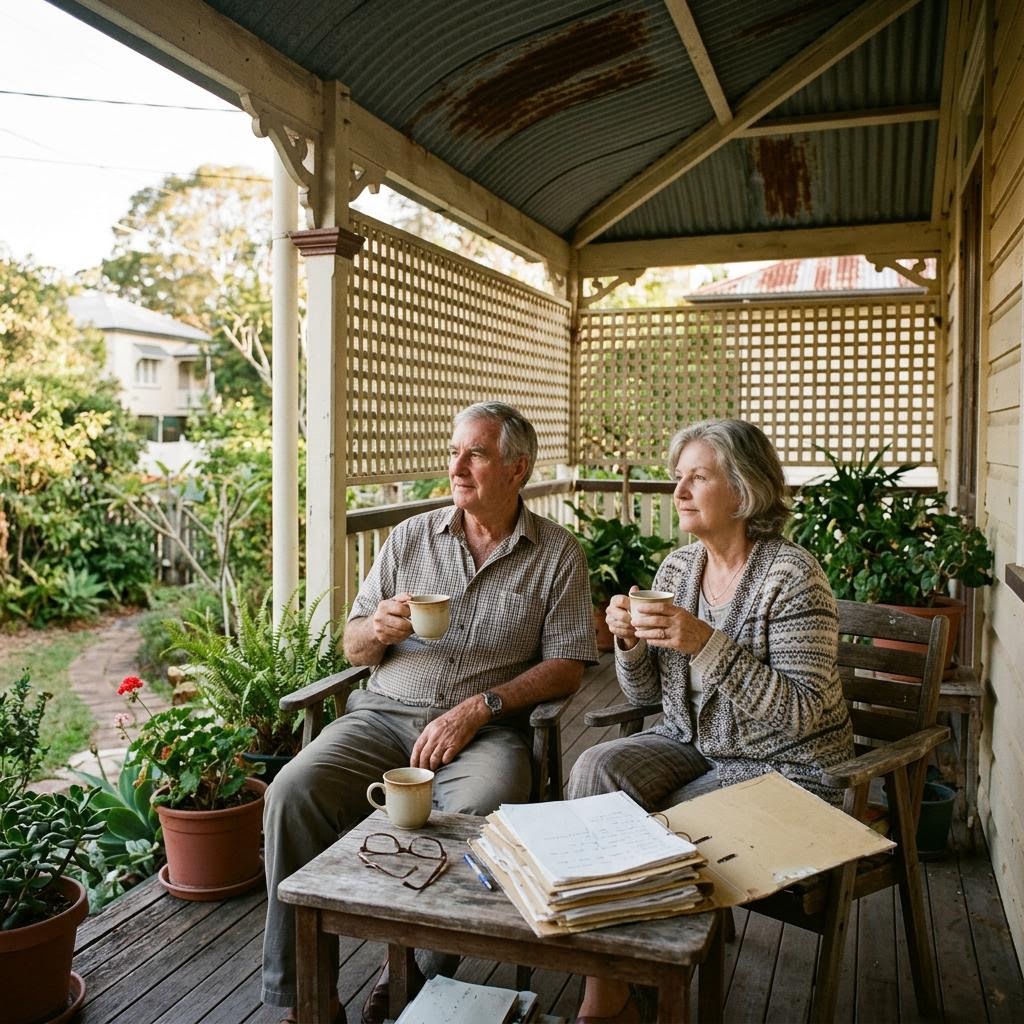
Based on a real discussion shared online by a retired couple who reassessed their financial plans after unexpected changes during retirement. Some personal details have been simplified while preserving the circumstances described.
The Story
For almost twenty years, Karen and Steve had followed the same retirement plan.
Save consistently.
Pay off the mortgage.
Retire debt free.
Live off superannuation and investments.
For a while, everything worked exactly as expected.
Then retirement became more expensive.
Insurance premiums increased.
Healthcare costs crept upwards.
The car needed replacing.
A storm damaged part of the roof.
None of the expenses were catastrophic.
Together, though, they slowly changed the couple's financial picture.
Steve kept saying the same thing.
"We're not in trouble."
"We just don't have as much breathing room anymore."
Friends suggested downsizing.
Their financial adviser encouraged them to review every available option.
One possibility was a reverse mortgage.
Rather than relying on brochures or advertisements, Karen searched online for people who had reached the same crossroads.
What Actually Happened
The discussion showed that many retirees eventually revisit plans they once believed were settled.
Several contributors explained they had downsized after deciding the ongoing costs of a larger home no longer suited their retirement.
Others had explored reverse mortgages because they wanted to remain where they were while improving cash flow.
A number of retirees said the most valuable part of the process wasn't choosing a product.
It was taking the time to reassess their goals.
Many admitted that the retirement they planned at sixty looked quite different by seventy.
The conversation became less about finding the perfect financial solution and more about adapting to changing circumstances.
Original discussion:
https://www.reddit.com/r/retirement/comments/reviewing_retirement_plans_reverse_mortgage/
Why They Made That Choice
Karen and Steve weren't abandoning their original retirement plan.
They were updating it.
The reverse mortgage wasn't replacing decades of careful planning.
It was one of several options they considered after recognising that retirement had evolved in ways they hadn't anticipated.
Their priority remained the same.
Stay financially comfortable while continuing to enjoy the home and community they loved.
Lessons Learned
Several themes appeared consistently throughout the discussion.
Retirement plans should be reviewed regularly. A strategy that works today may deserve another look as circumstances change.
Unexpected expenses are part of retirement. Flexibility can become just as valuable as careful planning.
There is rarely a single correct answer. Downsizing, accessing home equity or adjusting spending may each suit different households.
Good planning adapts. Contributors frequently described successful retirement planning as an ongoing process rather than a one-time decision.
What Other People Thought
The discussion reflected a wide range of retirement experiences.
Some contributors had changed almost nothing after retiring.
Others had substantially revised their plans over time.
Several homeowners explained that simply understanding every available option gave them greater confidence, regardless of which path they eventually chose.
The strongest message throughout the discussion was straightforward.
Retirement is rarely static, and financial planning doesn't need to be either.
How This Compares to Australia
Australian retirees also commonly revisit their financial plans as living costs, health needs and personal priorities change over time.
For eligible homeowners, a reverse mortgage is one option that may provide access to part of the equity in their home while allowing them to continue living there.
Australian reverse mortgages are regulated under the National Consumer Credit Protection framework, and eligible loans include a statutory No Negative Equity Guarantee.
Because interest generally compounds over time unless voluntary repayments are made, homeowners often compare a reverse mortgage with other retirement strategies before deciding what best suits their circumstances.
Key Takeaways
Karen and Steve didn't see reviewing their retirement plan as admitting failure.
They saw it as good planning.
The reverse mortgage wasn't their original strategy.
It became one possible option because life had changed.
For many retirees, the strongest financial plans aren't the ones that never change.
They're the ones that continue adapting as retirement unfolds.
Story Snapshot
Location: United States
Source: Reddit
Perspective: Retired couple
Stage: Reviewing retirement finances
Primary reason being considered: Improve financial flexibility while remaining in the family home
Outcome: Unresolved
Biggest concern: Whether changing retirement circumstances required changing long-term financial plans.
Key lesson: Retirement planning is an ongoing process. Reviewing available options as circumstances evolve can help homeowners make decisions that continue to reflect their goals and lifestyle.
Source