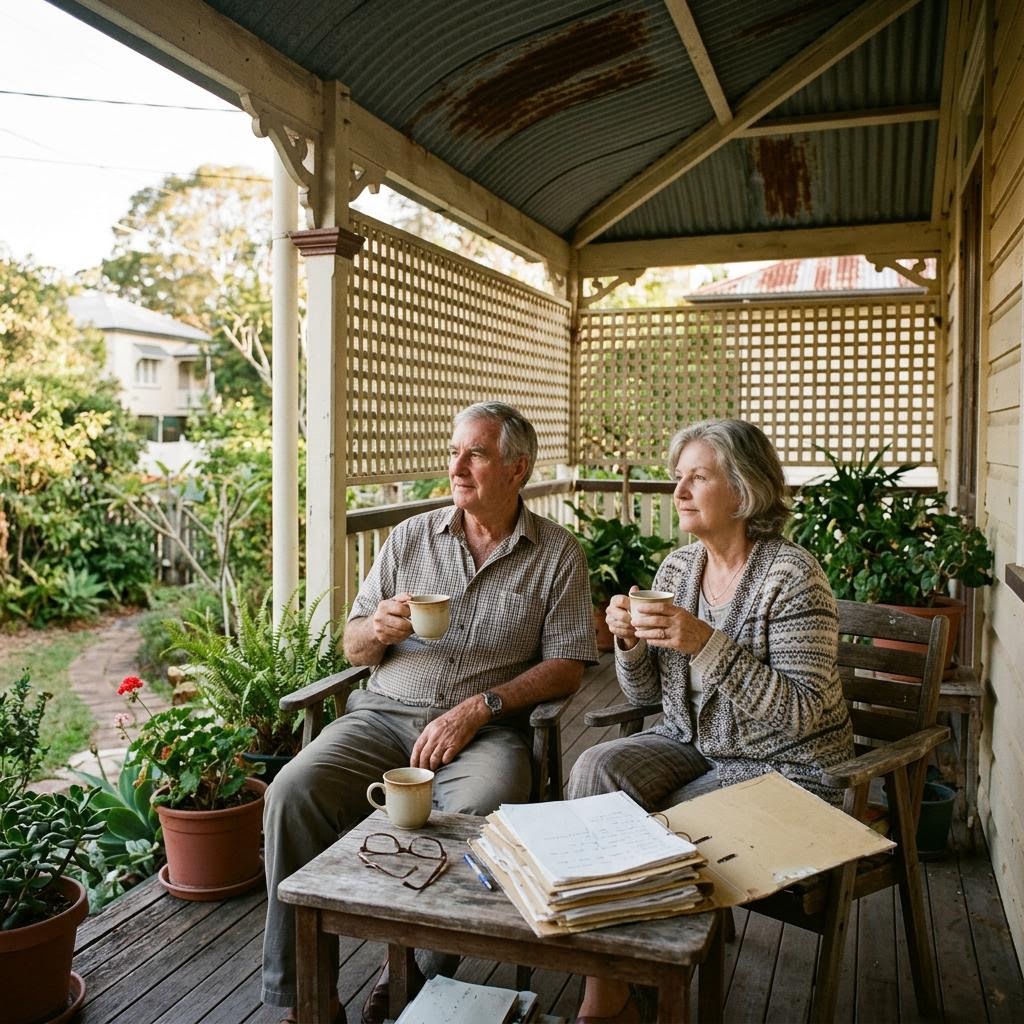
Based on a real discussion shared online by a retired homeowner who explored a reverse mortgage after becoming increasingly anxious about future financial uncertainty. Some personal details have been simplified while preserving the circumstances described.
The Story
Tom wasn't losing sleep because he couldn't pay his bills.
He was losing sleep because he didn't know what might happen next.
He was retired, owned his home outright and lived comfortably enough.
But every news headline seemed to bring another reason to worry.
Living costs.
Healthcare.
Insurance.
Interest rates.
The future felt increasingly unpredictable.
His daughter noticed he had stopped replacing things around the house.
The dishwasher had been broken for months.
The fence leaned a little further every winter.
When she asked why, Tom shrugged.
"What if I need that money later?"
She pointed out that his home was worth far more than he had ever imagined.
"I know," he replied.
"But I can't buy groceries with the walls."
That conversation led them to research reverse mortgages, not because Tom urgently needed cash, but because he wanted to understand whether there was a financial safety net if retirement became more expensive than expected.
What Actually Happened
The online discussion quickly revealed that many retirees weren't researching reverse mortgages because they were already in financial difficulty.
They were researching them because uncertainty was stressful.
Several contributors explained they had established access to home equity simply because it provided reassurance.
Some eventually used it.
Others never did.
A number of homeowners said that knowing the option existed helped them feel more confident about facing unexpected expenses later in retirement.
Others preferred keeping larger savings or downsizing instead.
The discussion wasn't about finding certainty.
It was about finding confidence despite uncertainty.
Original discussion:
https://www.reddit.com/r/retirement/comments/reverse_mortgage_for_peace_of_mind/
Why They Made That Choice
Tom wasn't looking for extra spending money.
He wanted peace of mind.
He knew he couldn't predict what retirement would look like five or ten years into the future.
Understanding how a reverse mortgage worked became part of preparing for possibilities rather than responding to a crisis.
Lessons Learned
Several themes appeared consistently throughout the discussion.
Financial security is about confidence as well as cash flow. Many retirees value knowing they have options if circumstances change.
Preparing doesn't always mean borrowing immediately. Some homeowners research financial products long before they need them.
Retirement uncertainty is common. Even financially comfortable retirees often worry about future healthcare costs or unexpected expenses.
Different people find reassurance in different ways. Some rely on savings, others downsize, while some explore access to home equity.
What Other People Thought
Many contributors recognised the emotional side of retirement planning.
Some described reverse mortgages as providing flexibility if life became more expensive than expected.
Others said they preferred leaving their home equity untouched for as long as possible.
Although opinions differed, contributors broadly agreed that understanding all available options often reduced financial anxiety, even if those options were never used.
How This Compares to Australia
Many Australian retirees also look beyond today's financial position and consider how they might respond to future changes in health, living costs or personal circumstances.
For eligible homeowners, a reverse mortgage is one option that may provide access to part of the equity in their home while allowing them to continue living there.
Australian reverse mortgages are regulated under the National Consumer Credit Protection framework and eligible loans include a statutory No Negative Equity Guarantee.
Because interest generally compounds over time unless voluntary repayments are made, homeowners often compare this approach with alternatives as part of broader retirement planning.
Key Takeaways
Tom's biggest challenge wasn't a lack of money.
It was a lack of certainty.
Researching a reverse mortgage didn't solve every future problem.
It helped him understand what options might be available if those problems ever arrived.
Sometimes the greatest value in planning isn't changing today's finances.
It's reducing tomorrow's uncertainty.
Story Snapshot
Location: United States
Source: Reddit
Perspective: Retired homeowner
Stage: Researching a reverse mortgage
Primary reason being considered: Create greater financial flexibility for possible future expenses
Outcome: Unresolved
Biggest concern: Feeling financially prepared for unexpected retirement costs.
Key lesson: Some retirees explore reverse mortgages well before they need additional funds because understanding their options can provide confidence when planning for an uncertain future.
Source