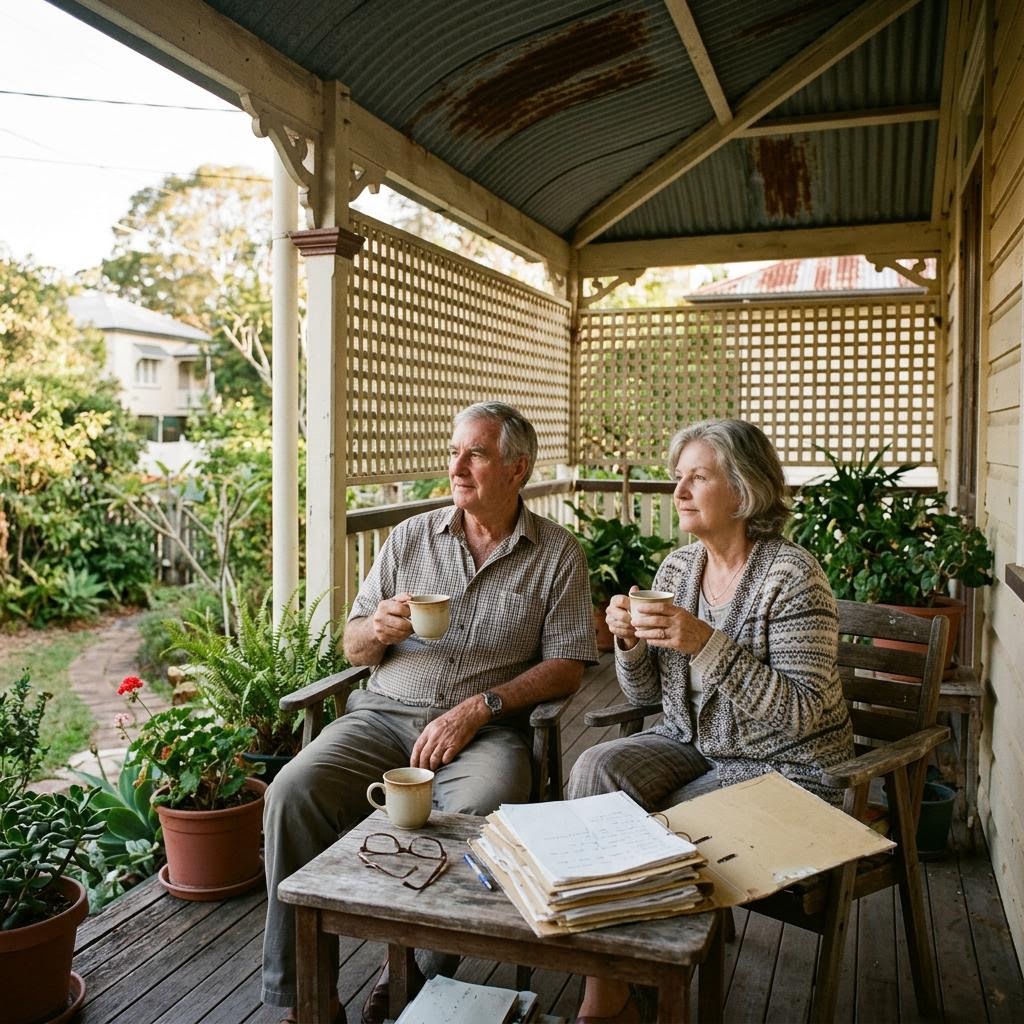
Based on a real discussion shared online by the adult child of a reverse mortgage borrower. Some personal details have been simplified while preserving the circumstances described.
The Story
When Mum first took out the reverse mortgage, the family barely gave it a second thought.
She'd recently retired, her savings were starting to run low and she was determined to stay in the home she'd lived in for more than thirty years.
At the time, it seemed like a sensible solution.
She wasn't making monthly repayments.
She could continue living independently.
Life carried on much as it always had.
Years passed.
The children visited every few weeks, helped with odd jobs around the house and assumed everything was under control.
Then Mum's health declined.
As they started helping organise her finances, they opened the latest loan statement.
The balance was far higher than anyone expected.
Not because something had gone wrong.
Simply because time had passed.
Unsure whether they had missed something, one of the children shared the situation online to understand whether other families had experienced the same thing.
What Actually Happened
The responses were almost unanimous.
Many people explained that this was exactly how reverse mortgages are designed to work.
Because regular repayments generally aren't required while the borrower continues to meet the loan conditions, interest is usually added to the outstanding balance.
Over many years, that balance can grow substantially through compounding.
Several commenters said they had experienced the same surprise when helping parents organise their finances later in life.
Others pointed out that the important question wasn't how much had been borrowed originally.
It was whether the loan had helped the homeowner achieve the reason they took it out in the first place.
In Mum's case, it had.
She'd remained in her own home for many additional years without needing to sell.
Original discussion:
https://www.reddit.com/r/personalfinance/comments/1ajsuls/inheriting_a_house_with_a_reverse_mortgage/
Why They Made That Choice
The reverse mortgage wasn't intended to maximise the family's future inheritance.
It was intended to improve Mum's retirement.
She wanted to remain close to her neighbours, continue living in familiar surroundings and avoid moving simply because most of her wealth was tied up in the family home.
The loan allowed her to access some of that equity when she needed it.
Years later, her children were looking at the same decision from a different perspective.
Their focus had naturally shifted to the remaining equity and the estate.
Lessons Learned
Several important themes emerged from the discussion.
Time changes how reverse mortgages look. A loan that appears relatively small at the beginning may look very different many years later because of compound interest.
The loan should be judged against its purpose. Many commenters encouraged families to ask whether the homeowner achieved the retirement they wanted, rather than focusing only on the remaining balance.
Estate conversations matter. Families who understand a reverse mortgage before it becomes part of an estate are often better prepared for what comes later.
Expectations are important. Adult children sometimes assume the value of the family home will eventually become their inheritance, while parents may see the home's equity as something to use during retirement.
What Other People Thought
The discussion reflected two very different viewpoints.
Some people focused on the size of the outstanding loan balance and how much equity had been consumed over time.
Others reminded readers that the homeowner had spent decades building that equity and was entitled to use it to improve their own retirement.
Several contributors shared similar experiences, explaining that while the numbers could initially be surprising, they also recognised that the reverse mortgage had allowed their parent to remain independent for far longer than might otherwise have been possible.
Rather than debating whether reverse mortgages were inherently good or bad, the discussion centred on whether the loan had fulfilled its intended purpose.
How This Compares to Australia
Australian reverse mortgages also generally operate by adding interest to the outstanding loan balance over time unless voluntary repayments are made.
For many homeowners, the trade-off involves balancing improved retirement cash flow or financial flexibility against a reduction in the equity that may remain in the property later.
Australian reverse mortgages covered by the relevant legislation include a statutory No Negative Equity Guarantee, meaning borrowers or their estates generally cannot owe more than the property's market value when the property is sold.
Every loan and every homeowner's circumstances are different, so understanding how interest may accumulate over time is an important part of understanding how a reverse mortgage works.
Key Takeaways
This family's surprise wasn't caused by hidden fees or unexpected changes.
It came from looking at a long-term loan after many years had passed.
The reverse mortgage had achieved its original purpose.
It had helped Mum remain in her home.
Years later, her children were seeing the other side of that decision.
For many families, understanding both outcomes before a reverse mortgage is established can lead to more informed conversations and clearer expectations in the years ahead.
Story Snapshot
Location: United States
Source: Reddit
Perspective: Adult child
Stage: Existing reverse mortgage becoming part of future estate planning
Primary reason for the original loan: Remain in the family home while accessing home equity
Outcome: Mixed
Biggest concern: The outstanding loan balance had grown much larger than the family expected over time.
Key lesson: Reverse mortgages are designed to be long-term loans. Understanding how compound interest affects the balance over many years can help families better understand both the benefits and the long-term trade-offs.
Source