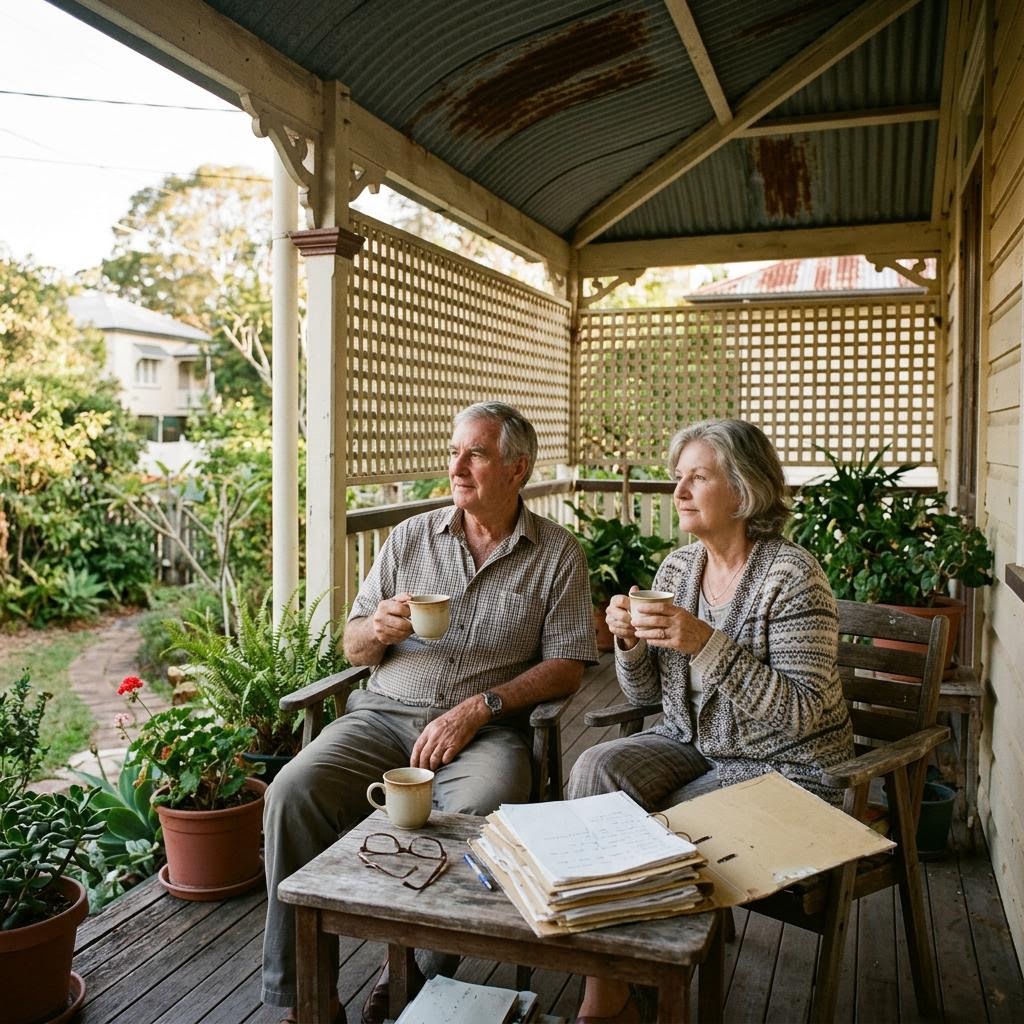
Based on a real discussion where one spouse was strongly opposed to taking out a reverse mortgage while the other believed it offered the best path forward. The conversation explored fear, financial pressure and the challenge of making major retirement decisions together. Some personal details have been simplified while preserving the circumstances described.
The Story
When my husband first suggested a reverse mortgage, I felt my stomach drop.
I'd spent years hearing the same warnings.
"They'll take your house."
"You'll lose everything."
"Never sign one."
To him, it was simply another financial option worth considering.
To me, it felt like risking the home we'd worked our entire lives to own.
The more we talked, the further apart we seemed to get.
He focused on the numbers.
I focused on what could go wrong.
Eventually I realised we weren't arguing about the loan.
We were arguing about risk.
Looking for clarity, I turned to an online community to hear from people who had already faced the same decision.
What Actually Happened
The discussion attracted responses from homeowners, adult children and people familiar with reverse mortgages.
Many contributors encouraged the couple not to rush into a decision while one partner remained uncomfortable.
Several explained that fear often came from misunderstanding how modern reverse mortgages worked, while others agreed that caution was entirely reasonable given the long-term impact on home equity.
Some commenters shared positive experiences where a reverse mortgage allowed older homeowners to remain in their home and improve cash flow.
Others suggested looking at alternatives first, including downsizing, restructuring finances or speaking with an independent adviser before committing.
A recurring message emerged throughout the discussion.
The financial product mattered.
But so did ensuring both spouses genuinely understood it and were comfortable with the decision.
Why They Disagreed
The couple had different priorities.
One spouse saw home equity as a resource that could improve retirement.
The other saw the home as security that should only be touched as a last resort.
Neither viewpoint was irrational.
They simply reflected different attitudes towards financial risk and peace of mind.
Lessons Learned
Several themes appeared throughout the discussion.
Major financial decisions affect both partners. Contributors encouraged taking the time to reach a shared understanding before proceeding.
Fear often comes from uncertainty. Learning how a reverse mortgage actually works helped some homeowners separate myths from genuine risks.
Alternatives deserve consideration. Many suggested comparing other retirement funding strategies before deciding.
Agreement matters. Even commenters who supported reverse mortgages generally felt both spouses should feel informed and comfortable before entering a long-term arrangement.
What Other People Thought
The discussion remained balanced.
Some contributors believed a reverse mortgage was an excellent solution in the right circumstances.
Others said they personally wouldn't choose one.
Most agreed that the decision should never be driven by pressure from either spouse or by fear alone.
Instead, they encouraged the couple to understand all of their options before reaching a joint decision.
How This Compares to Australia
Australian couples often face similar conversations when retirement income, rising living costs or future healthcare expenses place pressure on household finances.
For eligible homeowners, a reverse mortgage may provide access to home equity while allowing them to remain in their home.
Australian reverse mortgages are regulated under the National Consumer Credit Protection Act and include a statutory No Negative Equity Guarantee.
Many Australian advisers encourage both borrowers to fully understand the product, discuss the long-term implications together and compare alternative strategies before making a decision.
Key Takeaways
The biggest challenge wasn't choosing a financial product.
It was making a decision together.
The discussion showed that reverse mortgages can bring different emotions to the surface, even within the same household.
Taking time to understand the options, ask questions and listen to each other's concerns often proved just as important as the financial decision itself.
Story Snapshot
Location: United States
Source: Reddit
Perspective: Married homeowner
Stage: Considering a reverse mortgage
Primary reason being considered: Resolve differing views about using home equity to support retirement
Outcome: Unresolved
Biggest concern: One spouse feared the long-term consequences of a reverse mortgage while the other believed it offered the best financial solution.
Key lesson: Couples often approach financial risk differently. Before entering a reverse mortgage, ensuring both partners understand the product and are comfortable with the decision can help prevent conflict and lead to more confident long-term planning.
Source