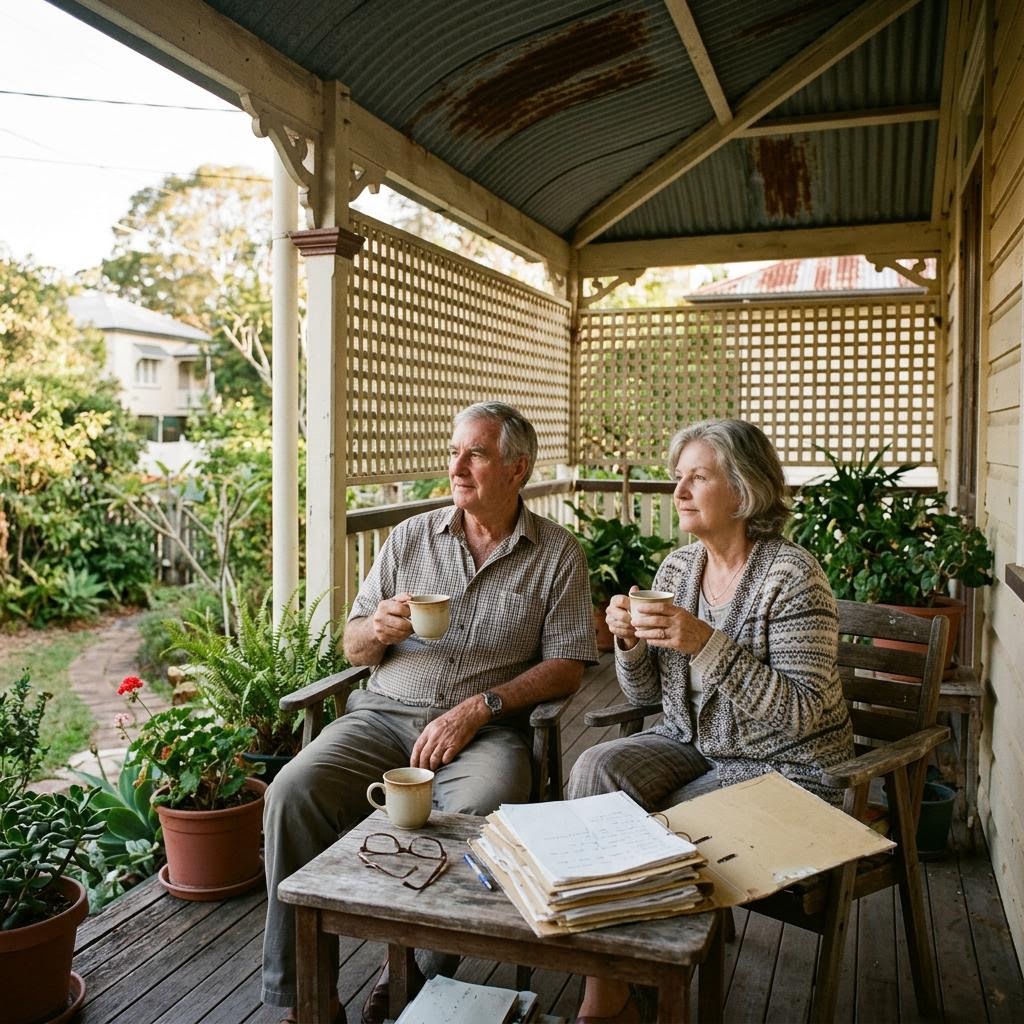
Based on a real discussion where homeowners, mortgage professionals and family members shared practical experiences with reverse mortgages, including both the advantages and the disadvantages. Some personal details have been simplified while preserving the themes discussed.
The Story
David had noticed something strange.
Whenever someone mentioned reverse mortgages, the conversation usually became one-sided.
One person insisted they were the perfect retirement solution.
Someone else called them a financial disaster.
Very few people seemed willing to admit that both views might contain some truth.
Approaching retirement himself, David wanted something more balanced.
He wasn't looking for reassurance.
He wasn't looking for reasons to avoid them either.
He simply wanted to understand what life actually looked like for people who had one.
While searching online, he found a discussion asking:
"Who has a reverse mortgage, and what are the pros and cons?"
It turned out to be one of the most balanced conversations he'd read.
What Actually Happened
The discussion brought together borrowers, adult children, mortgage professionals and people who had watched relatives use reverse mortgages.
Many contributors agreed that reverse mortgages could be extremely useful when they solved a specific retirement problem.
Some homeowners had used them to remain in the family home after retirement income became tight.
Others used the funds for renovations, healthcare expenses or to improve cash flow without taking on mandatory monthly repayments.
Mortgage professionals explained that the product often worked well when borrowers understood exactly how it operated before signing.
The disadvantages raised throughout the discussion were equally consistent.
Several contributors reminded readers that interest compounds over time, meaning the loan balance can grow significantly over many years.
Others noted that the remaining home equity available for beneficiaries may be substantially reduced.
Rather than arguing that reverse mortgages were either good or bad, the discussion repeatedly returned to one idea.
The right outcome depended on whether the product matched the homeowner's goals.
Why They Made That Choice
The borrowers weren't trying to maximise wealth.
Most were trying to maximise independence.
For many contributors, remaining in a familiar home was more important than preserving every dollar of equity.
Others viewed the family home primarily as an asset that could improve retirement rather than something that had to remain untouched until death.
Lessons Learned
Several themes appeared consistently throughout the discussion.
Reverse mortgages solve specific problems. Contributors generally viewed them as useful tools rather than universal solutions.
Compound interest deserves careful consideration. Most disadvantages discussed related to how the loan balance grows over time.
Lifestyle and inheritance often pull in different directions. Homeowners and beneficiaries sometimes prioritised different outcomes.
Education reduced regret. Borrowers who fully understood the long-term consequences before signing generally expressed greater satisfaction with their decision.
What Other People Thought
The discussion remained remarkably balanced.
Mortgage professionals encouraged borrowers to compare all available retirement funding options.
Borrowers who had positive experiences often emphasised that they entered the loan with realistic expectations.
Even contributors who personally wouldn't choose a reverse mortgage acknowledged there were situations where it could be entirely appropriate.
How This Compares to Australia
Australian borrowers face many of the same considerations.
A reverse mortgage may allow eligible homeowners to access part of their home's equity while continuing to live there, but interest generally compounds unless voluntary repayments are made.
Australian reverse mortgages are regulated under the National Consumer Credit Protection Act and include the statutory No Negative Equity Guarantee, ensuring borrowers or their estates cannot owe more than the property's value when it is sold.
Many Australian borrowers compare reverse mortgages with downsizing, refinancing or other retirement strategies before deciding which approach best supports their long-term goals.
Key Takeaways
David didn't find a simple answer.
He found something more valuable.
People who had actually lived with reverse mortgages rarely described them as entirely positive or entirely negative.
Instead, they described a financial tool that worked well for some households and poorly for others.
Understanding both the advantages and the disadvantages gave him far greater confidence than listening to either side of the debate on its own.
Story Snapshot
Location: United States
Source: Reddit
Perspective: Borrowers, mortgage professionals and family members
Stage: Researching reverse mortgages
Primary reason being considered: Understand the real-world advantages and disadvantages before making a decision
Outcome: Mixed
Biggest concern: Separating genuine borrower experiences from common misconceptions and one-sided opinions.
Key lesson: Reverse mortgages are neither universally beneficial nor universally harmful. Their success depends largely on the homeowner's objectives, financial circumstances and understanding of the long-term trade-offs before entering the loan.
Source