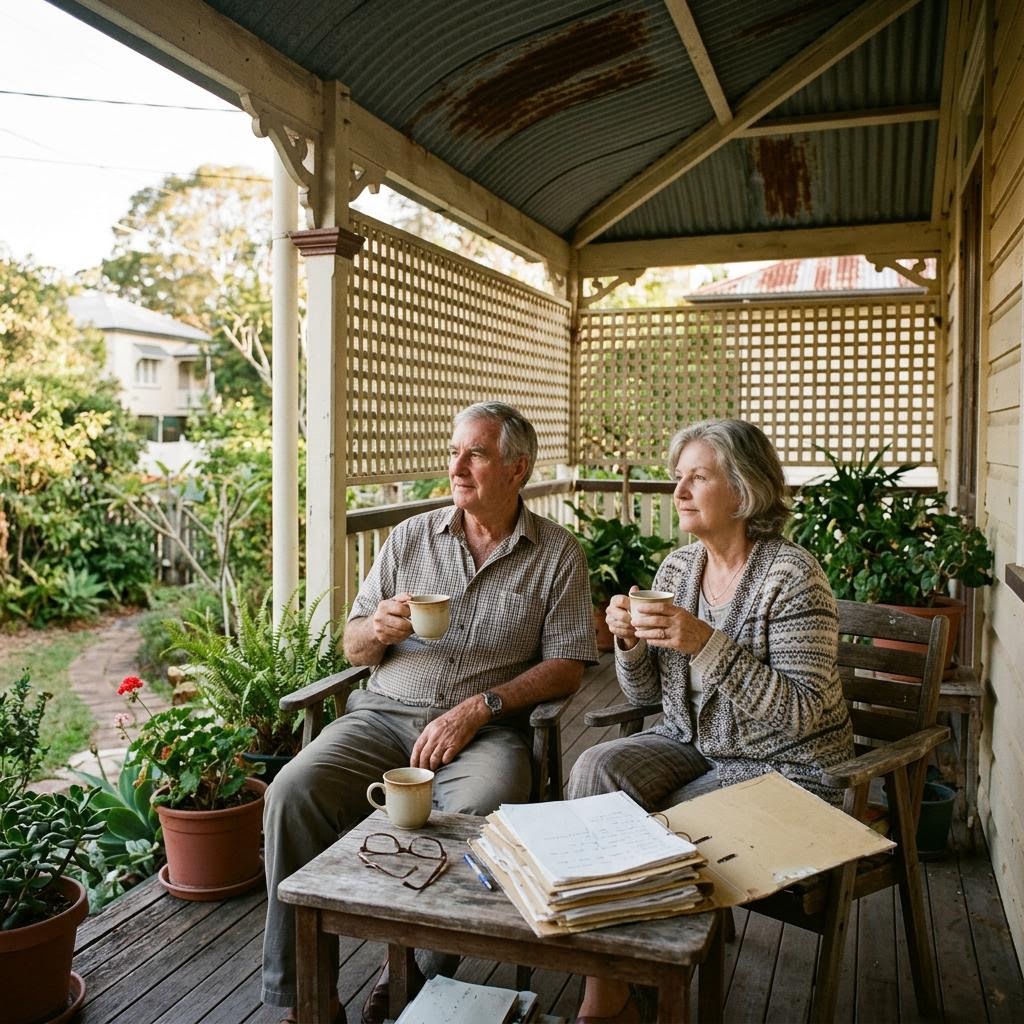
Based on a real discussion shared online by a retired homeowner reflecting on the purpose of the wealth accumulated in their family home. Some personal details have been simplified while preserving the circumstances described.
The Story
For almost forty years, every spare dollar went into one place.
The mortgage.
Extra repayments.
Weekend renovations.
New fencing.
Solar panels.
A kitchen upgrade.
By the time Brian retired, he owned his home outright.
Friends often congratulated him.
"You've done well."
He agreed.
But one afternoon, while reviewing his retirement finances, a different question came to mind.
What was all this equity actually for?
He wasn't planning to sell.
He didn't need extra money immediately.
He simply realised he'd spent decades building something without ever thinking about how it might fit into retirement.
That question stayed with him.
So he began reading discussions where other retirees talked about how they viewed the equity in their homes after leaving work.
What Actually Happened
The discussion showed there was no single answer.
Some contributors viewed their home purely as somewhere to live.
Others saw it as a financial resource that might one day help fund healthcare, home modifications or everyday living costs.
Several retirees explained they had researched reverse mortgages because they wanted to understand whether accessing part of their home equity could provide greater flexibility while remaining in the home they loved.
Others preferred downsizing or leaving the equity untouched.
The conversation wasn't about convincing anyone to use their home equity.
It was about helping retirees decide what role, if any, it should play in their broader retirement plan.
Original discussion:
https://www.reddit.com/r/retirement/comments/what_is_home_equity_for/
Why They Made That Choice
Brian wasn't looking for a particular financial product.
He was looking for purpose.
For decades, the goal had been simple: own the home.
Retirement introduced a different question.
Now that he'd reached that goal, how should the equity he'd built over a lifetime fit into the years ahead?
Learning about reverse mortgages became one part of answering that question rather than the answer itself.
Lessons Learned
Several themes appeared throughout the discussion.
Building wealth and using wealth are different skills. Many retirees found themselves asking new questions once they stopped working.
Home equity can have different purposes. Contributors viewed it as security, flexibility, inheritance or simply peace of mind depending on their circumstances.
Understanding options reduces uncertainty. Researching different retirement strategies helped homeowners feel more confident, even if they chose not to use them.
Retirement planning continues to evolve. Financial goals often change after decades of focusing on mortgage repayments and saving.
What Other People Thought
Many contributors admitted they had never really thought about the role of their home equity until retirement.
Some intended never to access it.
Others believed it was there to improve quality of life if circumstances changed.
Despite reaching different conclusions, contributors broadly agreed that understanding the available options was worthwhile before making any long-term decisions.
How This Compares to Australia
Many Australian retirees reach a similar point after paying off their homes.
For eligible homeowners, a reverse mortgage is one option that may provide access to part of the equity in the home while allowing them to continue living there.
Australian reverse mortgages are regulated under the National Consumer Credit Protection framework and include a statutory No Negative Equity Guarantee.
Because interest generally compounds over time unless voluntary repayments are made, homeowners often compare reverse mortgages with downsizing, investments and other retirement strategies before deciding how home equity might best support their long-term goals.
Key Takeaways
Brian spent decades asking how to build equity.
Retirement prompted a different question.
What role should that equity play now?
The answer will differ from one household to another.
Taking time to understand the available choices can help homeowners make decisions that reflect both their financial circumstances and the retirement they hope to enjoy.
Story Snapshot
Location: United States
Source: Reddit
Perspective: Retired homeowner
Stage: Reflecting on retirement planning
Primary reason being considered: Understand the role home equity could play in retirement
Outcome: Mixed
Biggest concern: Whether the wealth tied up in the family home should remain untouched or become part of a broader retirement strategy.
Key lesson: Paying off a home is a major milestone. Many retirees later discover that understanding how home equity fits into their long-term plans is an equally important part of retirement planning.
Source