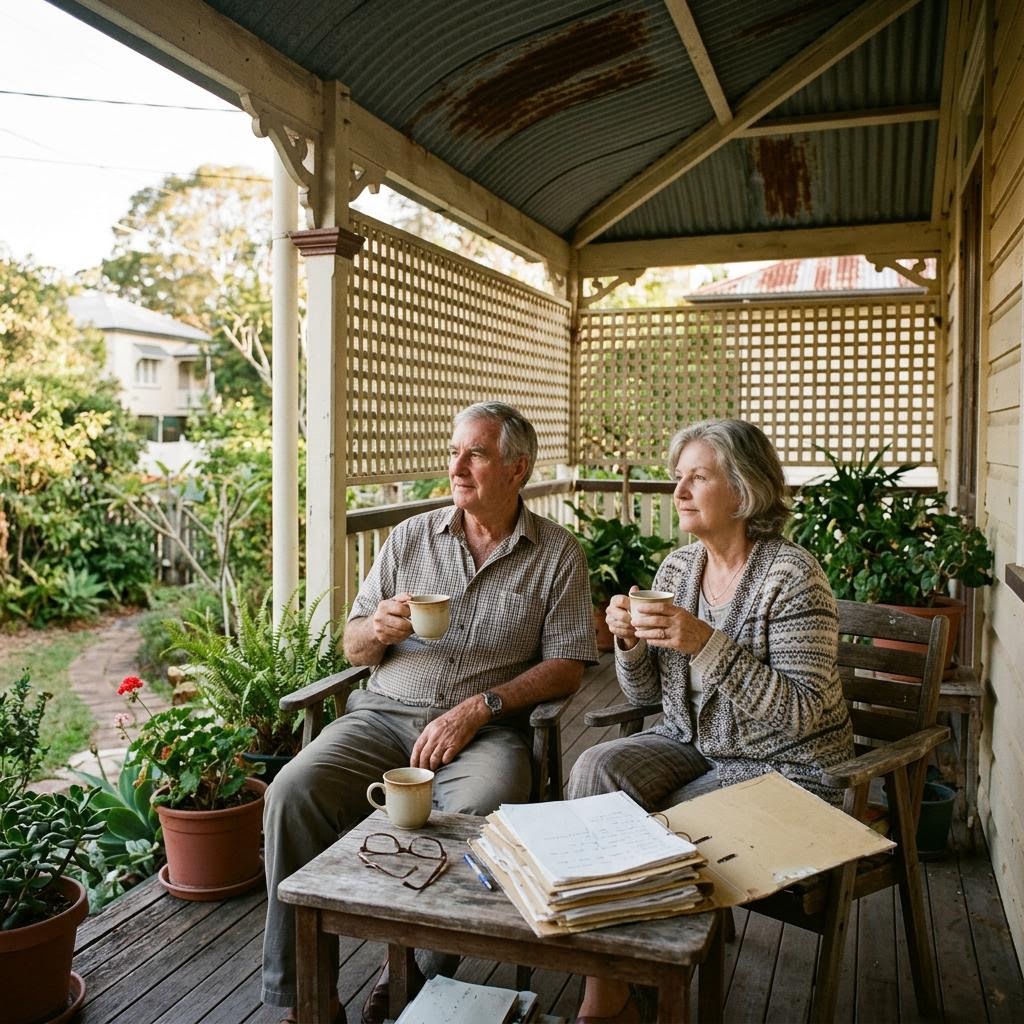
Based on a real discussion shared online by an adult child whose father refused to sell the family home despite financial pressure in retirement. Some personal details have been simplified while preserving the circumstances described.
The Story
For months, every conversation seemed to circle back to the same topic.
"Dad, you could sell this place tomorrow."
His children had done the maths.
The property had appreciated enormously over the years.
A smaller home would free up hundreds of thousands of dollars.
Maintenance would be easier.
Life, surely, would become simpler.
Dad listened politely before shaking his head.
"I'm not attached to the bricks."
"I'm attached to my life."
It wasn't until he explained what he meant that the family began to understand.
The neighbour who checked on him every morning.
The local pharmacist who knew his medications without asking.
The walking group he'd joined after Mum passed away.
His favourite park bench where he'd drink coffee every Saturday morning.
Selling the house meant leaving all of that behind.
While looking for alternatives, one of his children came across discussions about reverse mortgages and asked an online retirement forum whether anyone had used one specifically to avoid leaving a community they loved.
What Actually Happened
The responses focused less on finance than expected.
Many retirees explained that the emotional value of staying in a familiar community often became more important with age.
Several contributors said they had explored reverse mortgages because remaining connected to neighbours, healthcare providers and local services mattered more than maximising the value of their estate.
Others described choosing to downsize and building new routines elsewhere, saying it had worked well for them.
The discussion wasn't about proving one option was superior.
It highlighted that retirement decisions often involve balancing financial considerations with quality of life.
Original discussion:
https://www.reddit.com/r/retirement/comments/keeping_the_family_home_in_retirement/
Why They Made That Choice
Dad wasn't trying to avoid change.
He was trying to preserve independence.
The home represented stability, familiarity and social connection after losing his wife.
Accessing part of the equity in the property appeared worth exploring because it might allow him to continue living the life he already valued without immediately selling the home.
Lessons Learned
Several practical themes emerged from the discussion.
Community has real value. Friends, neighbours and familiar services can play a significant role in wellbeing during retirement.
Financial decisions are rarely purely financial. Lifestyle, health and emotional wellbeing often influence retirement choices.
Different retirees value different outcomes. Some prioritise preserving home equity, while others prioritise remaining in familiar surroundings.
Understanding someone's motivation changes the conversation. Once the family understood Dad's reasons, they stopped trying to convince him and started exploring options together.
What Other People Thought
The discussion included retirees who had chosen a variety of different paths.
Some had downsized and enjoyed a fresh start.
Others believed remaining in their long-term home had been one of the best decisions they made.
Many contributors agreed that there was no universal answer.
The best outcome depended on what the homeowner valued most and the practical realities of their individual circumstances.
How This Compares to Australia
Australian retirees often face similar decisions as property values rise and retirement needs change.
For eligible homeowners, a reverse mortgage is one option that may provide access to part of the equity in their home while allowing them to continue living there.
Australian reverse mortgages are regulated under the National Consumer Credit Protection framework and eligible loans include a statutory No Negative Equity Guarantee.
Because every retirement journey is different, many homeowners compare reverse mortgages with alternatives such as downsizing, using savings or other financial strategies before deciding which approach best aligns with their circumstances.
Key Takeaways
Dad's family began by looking at a property.
They finished by recognising a community.
The conversation changed once everyone understood that staying home wasn't really about the building.
It was about maintaining independence, routine and the relationships that had become part of everyday life.
For many retirees, those things can be just as valuable as the equity held within the home.
Story Snapshot
Location: United States
Source: Reddit
Perspective: Adult child
Stage: Considering a reverse mortgage
Primary reason being considered: Remain in the family home and community while improving financial flexibility
Outcome: Unresolved
Biggest concern: Whether remaining in a familiar community justified accessing home equity instead of downsizing.
Key lesson: Retirement housing decisions often involve much more than the value of the property. Community, independence and lifestyle can be equally important considerations.
Source