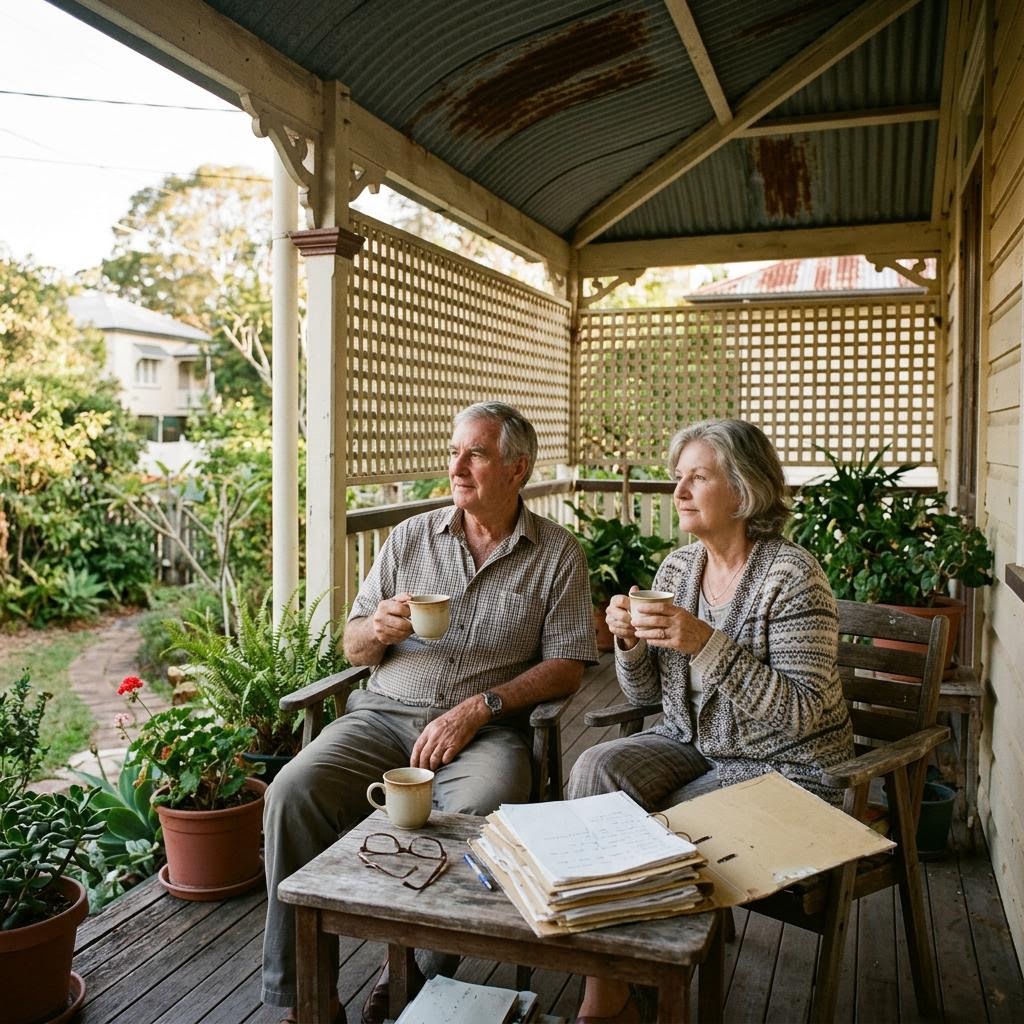
Based on a real discussion where an adult child sought advice after their father passed away, leaving behind a substantial reverse mortgage while their mother continued living in the family home. Some personal details have been simplified while preserving the circumstances described.
The Story
Losing Dad was hard enough.
The financial questions could wait.
Or so we thought.
A few weeks later, we started going through his paperwork.
That's when we found the reverse mortgage statements.
The balance was much larger than any of us expected.
Mum was still living in the house.
She wanted to stay there.
But nobody knew what the reverse mortgage meant now that Dad had passed away.
Did Mum have to leave?
Would the loan become immediately payable?
Should the house be sold?
Could she afford to stay?
The more we read, the more questions we had.
What Actually Happened
The discussion centred on helping the family understand their mother's options after the death of a borrower with a sizeable reverse mortgage.
Commenters explained that the first step was determining exactly how the reverse mortgage had been established and whether the surviving mother remained an eligible borrower under the loan.
Several contributors pointed out that if an eligible surviving borrower continued living in the home, the loan would often continue under its existing terms rather than requiring immediate repayment.
Others encouraged the family to review the current loan balance, property value, income and ongoing living expenses before making decisions about the future.
Rather than focusing solely on the reverse mortgage itself, many commenters viewed the situation as a broader retirement planning exercise.
The discussion explored whether Mum could comfortably remain in the property, whether selling might eventually become appropriate, and how any remaining home equity could best support her retirement.
Throughout the thread, contributors encouraged the family not to rush major decisions while still grieving.
Why They Were Concerned
The family's priority wasn't preserving an inheritance.
It was looking after Mum.
They wanted to understand whether she could continue living safely and comfortably in the home while making financially sensible decisions for the years ahead.
The reverse mortgage became one important piece of a much bigger conversation.
Lessons Learned
Several themes appeared throughout the discussion.
The surviving spouse's position is critical. Understanding who remains a borrower under the loan largely determines what happens next.
The reverse mortgage is only one part of retirement planning. Housing, income, health and future care needs all deserve consideration.
Families benefit from gathering information before acting. Contributors encouraged obtaining loan details, property values and legal advice before making assumptions.
Grief and financial decisions rarely mix well. Many recommended allowing time to understand the options before committing to major changes.
What Other People Thought
Commenters offered both practical guidance and emotional support.
Several had helped parents through similar situations and encouraged the family to contact the lender to clarify the surviving borrower's rights and obligations.
Others stressed that retirement planning should now focus on Mum's long-term wellbeing rather than simply resolving the outstanding loan.
The overall discussion remained reassuring and constructive.
How This Compares to Australia
In Australia, what happens after one borrower dies depends on the reverse mortgage agreement and whether another eligible borrower remains living in the property.
Where a surviving borrower continues to meet the loan conditions, the reverse mortgage may continue without immediate repayment.
Families are generally encouraged to contact the lender promptly, confirm the loan arrangements and obtain advice before making decisions about selling, refinancing or future housing.
Australian reverse mortgages also include a statutory No Negative Equity Guarantee, helping protect borrowers and their estates from owing more than the property's eventual sale value.
Key Takeaways
The reverse mortgage wasn't the family's biggest concern.
Mum was.
Once they understood that the discussion should begin with her future housing, financial security and wellbeing, the loan became much less intimidating.
The conversation shifted from worrying about the debt to planning for the person who still called the house home.
Story Snapshot
Location: United States
Source: Reddit
Perspective: Adult child
Stage: Planning for a surviving parent after the death of a reverse mortgage borrower
Primary reason being considered: Understand how the reverse mortgage affects the surviving mother's ability to remain in the family home
Outcome: Mixed
Biggest concern: Whether Mum could continue living in the property and what options remained after Dad's death.
Key lesson: After the death of one borrower, the focus often shifts from the reverse mortgage itself to the surviving spouse's long-term housing and financial needs. Understanding the loan terms before making major decisions can help families navigate an already difficult period.
Source